


Zeiss Builds a Global Field Service Foundation with Salesforce and Pulsar
May 5, 2026
Carl Zeiss AG is a global technology company with more than 175 years of history. The company serves both B2B and B2C markets and operates in the optics and optoelectronics industries, which span multiple areas, including medical technology, semiconductor manufacturing, research, and industrial production. Zeiss employs more than 46,000 people and operates in over 50 countries.
Service plays a central role in the Zeiss business. The company supports a large installed base of complex systems used in critical environments, including research labs, manufacturing facilities, and medical settings. Maintaining high service quality is essential to customer trust and long-term relationships.



The Challenge
Zeiss manages a global field service organization with thousands of engineers working on-site every day. These engineers service large, complex devices and often work in environments with limited or restricted network access. In some cases, connectivity is not allowed at all.
Before its transformation initiative, Zeiss relied on a combination of SAP CRM and a third-party mobile solution. The mobile tool operated as a standalone system and was not fully bidirectional. While some data could flow in one direction, getting updates back into core systems was difficult. Configuration and maintenance required extra effort, and the solution was approaching the end of its lifecycle.
At the same time, Zeiss was planning a broader business transformation and sought a modern CRM platform to support sales, service, and field operations globally. In addition, having reliable, bidirectional, always-available mobile access to the platform was a critical requirement.
The Solution
Zeiss selected Salesforce as its global CRM platform for sales and service, including Salesforce Field Service for scheduling and dispatch. As part of this program, Zeiss evaluated mobile options to support its field engineers.
After a detailed evaluation, Zeiss chose Pulsar by Luminix as its mobile solution. The decision was driven by several key requirements:
- Support for Windows laptops as well as tablets and handheld devices
- True offline capability
- A consistent experience across desktop and mobile
- Tight integration with Salesforce
- Flexibility to support complex field workflows, including custom service reports
- Support for offline validation rules
- Support for custom UI that is easy to use and optimized for their business processes
Unlike other options, Pulsar supported the way Zeiss engineers actually work. Many engineers connect laptops directly to machines during service visits. Pulsar allows them to work on Windows devices and supports mobile use on iOS as needed, all with the same user interface.
How Zeiss Uses Pulsar
Today, Pulsar supports Zeiss engineers’ day-to-day field service operations. Engineers use the app to:
- View daily task lists and assignments
- Perform preventive maintenance workflows
- Understand required parts and procedures
- Capture service data while on-site
- Work offline in restricted or remote environments
- Automatically sync data with Salesforce when connectivity is available
Pulsar also supports collaboration. Engineers can trigger second-level support when local teams cannot resolve an issue. Remote experts can access the same system and help guide repairs, all while keeping service data centralized.
The solution operates seamlessly across devices. Engineers can move between laptops and mobile devices without breaking their workflow. This flexibility is critical for servicing large, high-value equipment.
Results and Benefits
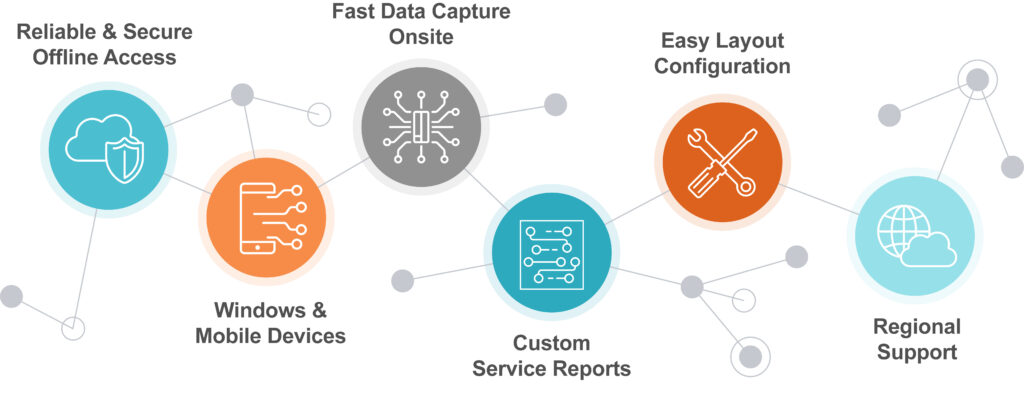
Early feedback from pilot regions has been positive. Zeiss teams value several aspects of the solution:
- Reliable offline access in environments without connectivity
- Support for both Windows and mobile devices
- Fast data capture during service visits, with a custom, optimized UI and offline validation rule support
- Custom service report generation
- Easy configuration of layouts and actions
- Immediate use of Salesforce backend changes without requiring mobile rework
- Optimized data synchronization supports country-specific business rules, allowing users to sync only the data they need
Pulsar helps Zeiss maintain the accuracy and up-to-date status of its database, in the field and in the office. The solution improves both service quality and aftermarket revenue opportunities, including proactive maintenance, upgrades, and repairs.
Looking Ahead
Zeiss is currently in a phased global deployment of their new field service solution using Salesforce and Pulsar. As adoption grows, usability remains a top priority. The company focuses on keeping the field experience simple, with limited screens, clear actions, and optimized with the information engineers need to efficiently do their jobs.
Zeiss is also exploring the role of AI in both sales and service. Near-term use cases include case summaries, knowledge access, and next-step recommendations. Long-term, the company sees AI as a means to support engineers and improve preparation, not as a replacement for human expertise.
Collaboration matters. Zeiss values working closely with partners and sees value in early access to new capabilities, including AI-driven features, as part of its broader transformation.
Why It Matters
For Zeiss, service is not an afterthought. Service quality influences customer loyalty and future sales. With Salesforce and Pulsar, Zeiss is building a foundation that supports global scale, complex environments, and modern field service expectations.
By giving engineers reliable tools that work wherever they are, Zeiss strengthens its service operations and supports long-term customer relationships.
Share on: